Blog

Learning python pt.1

So while i’m still dabbling in MaxScript, the next big thing for me to learn is Python, with knowledge of python under my belt, even just a small amount, I’m instantly more employable and adaptable in my field of work, Python is used in all sorts of applications from science to games design, the game Mount and Blade is based on the python programming language.

Python’s language is also fairly easy to pick up, and its documentation is well written, plus there are a lot of android apps and books that I can get online that will help me comprehensively learn its syntax.

Right now, i’m trying to learn practically, rather than theoretically, but I am having to be aware of any bad habits I may get into.

Progressing With MaxScript

So I’m making some decent progress with my accessory rail maxscript, I’ve watched a few starter tutorials and I now know that MaxScript works similarly to photoshop actions in that anything you do in the program can be recorded and these actions can be used as part of a script.

I’ve actually simplified the original script design a lot, the rails no longer loft along a spline, but instead a rollout is generated in which the user inputs the number of rails needed and the rails are generated upon the “Create Rail” button being pressed.

The script works, sort of, it clones the correct number of rails, and it offsets them, but it offsets them in the wrong direction, an easy fix I should think.

Then all I need to do is figure out how to append the start and end grooves onto the rail, then weld them all together.

UPDATE:
it now offsets as normal

UPDATE OF THE UPDATE:
It now collapses the meshes into one.

(Backlog)Where Do I Fit In?

So, I’ve always wanted to be in the games industry, since I was very young, but my actual realization of this and my choice of role has changed several times in the past 10 years or so.

As I draw closer to the industry I need to look specifically at a specified role to take up and focus on.

I’ve decided to take my tutor’s advice and look at creative skillset for some pointers here, as I think it would be beneficial to see if i could pick up something to improve from there.

My main strength is 3D, some texturing, and I know how games engines work, I can carry a model through from start to finish, I’ve never stopped at just modelling and baking and passed it on to someone else.

The big problem I had with Creative Skillset, and I have had this discussion with my tutor as well, is it bundles 3d Artist in with the general role of ‘Games Artist’ and this generalization of the role on the site has made it difficult for me to fully understand what I need to know, the vague definition has me asking more questions than I have answers to.

I looked around to get a better idea of what I would need to do as a 3D artist primarily, and found a fairly decent tidbit of information on Polycount

The main skills I rely on, on a daily basis include:
– Sketching

– Being able to use the internet as an advantage, not a distraction.

– Solid ability to follow my own, or another’s concept, and not only build out a nice block out mesh… But to expand on it and make it even better.

– Being able to just model fast and efficiently in the given program the studio works with.

– Basic pipeline tasks

– Know how to use a versioning software.

– Ability to absorb knowledge like a sponge

– Networking

– Self marketing

I know most of this, the big issues I see in my own skillset in comparison to this job are Sketching, I mean, I know how to draw but I am not great at it, it’s gone from being something I was really good at to being my Achilles heel. Something I can definitely work on.
But the polycount poster recommended something more appealing; the role of Tech Artist.

The Tech Artist is the bridge between the programmers and the artists, the tech artist investigates new workflows and techniques and teaches these to their fellow artists.

Considering my background with programming, and my high interest in this field, this seems like more of a role for me, the tech artist’s skillset is as follows:

  • be able to show technical proficiency in areas such as lighting and rendering, texturing, and graphics-related programming languages such as shaders
  • have extensive knowledge of art packages ranging from modelling to texturing and special effects
  • be able to customise art packages so that they are as streamlined as possible for specific projects
  • be able to work well as part of a team
  • have good communication and people management skills, in order to train and mentor others
  • be able to work with minimum supervision
  • have excellent organisational skills
  • be able to think creatively to resolve technical challenges and limitations
  • have knowledge of console hardware architecture
  • be highly skilled in the use of 3D graphics software
  • be able to anticipate the needs of the artists so as to streamline their productivity
  • have knowledge of the requirements of the relevant health and safety legislation and procedures

I am already doing most of the things listed here, with me wanting to explore maxscript to maximize my efficiency in Blackfoot Studios is part of the role of Tech artist.

So my strengths compared to this list are:
In short, my background in computing has made me an artist who thinks like a programmer, I can see things in a very procedural way whereas sole artists may not, this I feel not only makes me more adaptable for the games industry, but also a great candidate for this role.
-Technical proficiency – I have at least some knowledge of object oriented programming, rendering scripting, lighting, node based blueprinting, different shaders such as skin and super shaders, their differences. John wants me full time after education because of my high interest in post processing, which is something a tech artist does.
-Extensive Knowledge of art packages – I use a number of art packages in my workflows and I’m always willing to learn and work in new ones, such as Marvelous designer and substance designer, which are two programs that are totally new to me.
-Be able to work well as part of a team, as far as I’m aware from John, this is true.
-Be Able to work well with minimum supervision
-Creative thinking to resolve technical challenges
-highly skilled in the use of 3D software (Max, but no Maya, something i will work on)
-be able to anticipate the needs of artists so as to streamline their productivity, I have done so with blackfoot, and I keep up to date with changing software and trends to anticipate changes.

My things to look at are (weaknesses):

-have excellent organisational skills
-have good communication and people management skills, in order to train and mentor others
-have knowledge of console hardware architecture; while I know this, it could improve.
-Learning Maya at least to some degree.

Opportunities available to me:

-Organizational skills can be taught at any time, there are many self help guides available  on the internet.
-People management and mentoring skills are available to me with class, I can teach them  Zbrush and industry workflows for alternative techniques for example.
-Knowledge of console hardware architecture can be looked at on the internet, I could       probably write about it.

Threats to this progress
I’m Dyspraxic, naturally I’m a fair bit of a clutz and it’s difficult to train out of me.
Time, it’s always a threat, Rome wasn’t built in a day and sometimes learning all of these things can take in excess of a year.
College, they may not allow me to hold a class, but I seldom think this will be an issue.
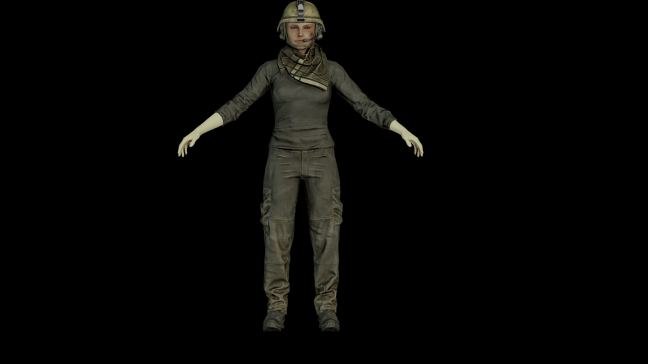
 

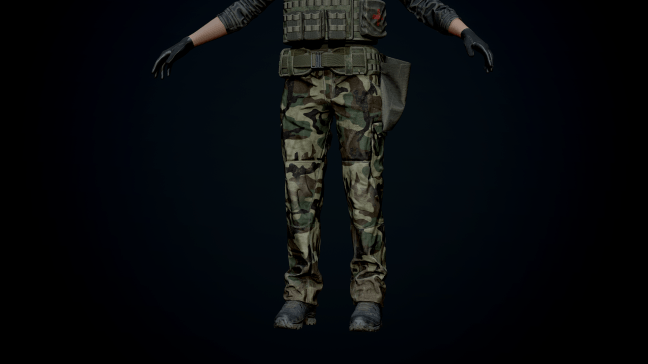
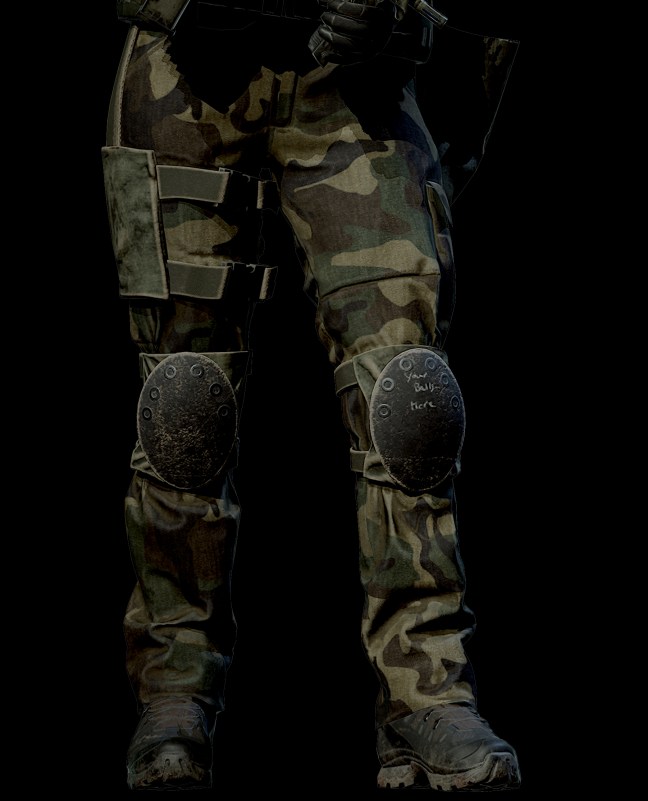
Deconstructing the Ghost Recon Character Workflow – The Pants

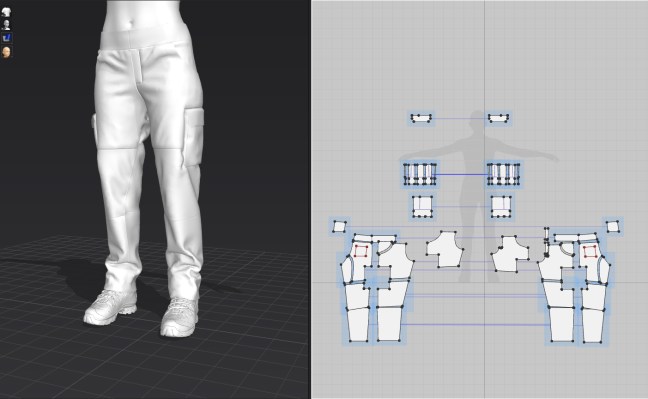
I really enjoyed Marvelous Designer during alternative techniques, so I decided to stick at it some more and do something more interesting than just a cloak.

My wonderful boss, John gave me a new female base mesh taken from LIDAR scan data, I was eager to test it out, and he wanted a female character for the game, so, I challenged myself to fully get to grips with Marvelous Designer, knowing that this would make me more adaptable as an organic modeller further down the line.

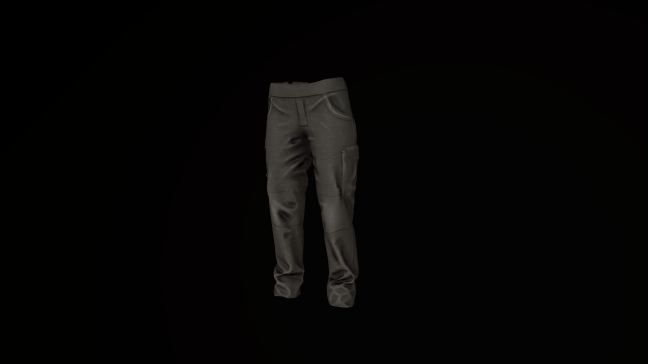
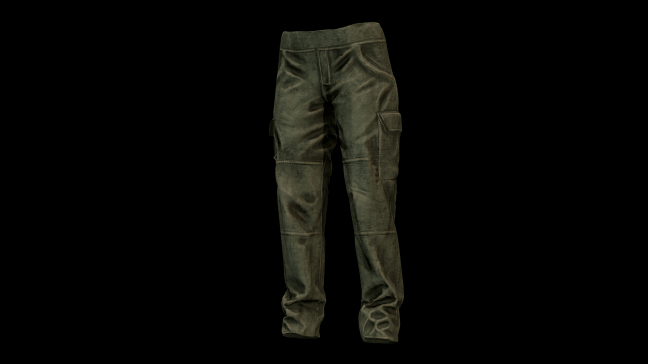
I watched some more videos from Lori Griffiths, and I was able to make some nice pants in the end. marv_pants

It took about 5 attempts to get the actual baked lowpoly right, though, but in the end, it turned out pretty good.

First Attempt:
Flat, unconvincing and plain.screenshot1081.png


2nd Attempt:

Smoother, and slightly more visually interesting, but unconvincing and problematic. screenshot1087.png

3rd Attempt:

While not as flat and still visually interesting, it was unconvincing and lacked detailsscreenshot1088.png

4th Attempt:

Looked much better, visually interesting and not flat, but was too straight and symmetrical. screenshot1114.png

Attempt 5:

Visually interesting while not being too straight and unconvincing with a good degree of visual fidelity, its one major problem being the high polygon count; roughly 7,000, but this shouldn’t be an issue with correct LOD handling and rigging.
Pants_v5.jpg

I’m starting to enjoy marvelous designer more now, and I can definitely see its benefits, hopefully i’ll continue to use it and extract more of its potential as I go.

Wanting to Explore MAXscript

As I have now found out I LOVE technical things, any excuse to connect noodles to squares or code in something and I’m there.

I’ve been looking at trying to optimize my workflow for Blackfoot, while also being able to help others and become more flexible in the industry, this also appeals to my desired role as a tech artist, anticipating artist’s needs and optimizing the workflow, I’ve noticed that there are some gaps that can be filled with a script within max.

One of these things is a Picatinny Rail. These are rails that have very exacting dimensions, and John has already commented that a lot of the models currently in game don’t have these dimensions set consistently, making the lead programmer’s job more difficult when it comes to the attachment system, again, with this script, i am doing the tech artist’s job of bridging the gap between artists and programmers, John can make consistent rail models in little time, Kris (the lead programmer) will no longer need to factor inconsistent rail sizes.

This could also be a great benefit to those in the industry and other areas alike too, so looking at making this has become more enticing.


The rail script needs to be:
– Consistent to MIL STD M1913 dimensions.
– Compatible with Turbosmooth
– Easy to use
-Topologically correct.

One idea I’ve come up with is to model the dimensionally correct M1913 rail parts; start, middle and end.

The spline length is then “got” and if it is not equal to a picatinny compatible length, it is rounded up to a picatinny compatible length.

The script also needs to make any Bezier points Linear

The script then needs to calculate the number of rail ‘rungs’ that can fit along the spline and create this many duplicates.

The script then needs to add a pathdeform modifier to these rungs, and place them along the spline before converting to an editable poly and welding the points.

Optionally there needs to be a ‘crease’ option as well, which will convert the picatinny rails to turbosmoothable versions.

Simple in words, possibly not in practice, it’s possible to do though, as all of these things are available in 3dsmax as default already, it’s just a case of automating the process.


Ghost Recon Wildlands Terrain Tools at GDC

I’ve found myself stuck in the massive open world of Ghost Recon Wildlands recently. Ghost recon has been one of my all time favorite games since childhood, but the series has had a very rocky past, since the second game, the quality Ubisoft has dished out has been sub-par with many scandals surrounding the game.

Despite my initial skepticism I’m willing to say whole heartedly Ghost Recon Wildlands has been its technical and social saving grace. The game is incredible.

I stumbled across a talk about the Terrain and Tools of Ghost Recon Wildlands, and I was very impressed by their outside the box thinking and how much problem solving took place over the 4 years of Ghost Recon’s development.

The terrain has been created with new proprietary sculpting tools made in-house by ubisoft based off of WorldMachine, following that the details and materials were created procedurally, following a set of rules. There were a lot of technological issues they had to solve, including major overhead problems, bugs, and just generally not looking very nice.

The result was a realistic and believable open world which is beautiful visually and technologically.

http://gdcvault.com/play/1024029/-Ghost-Recon-Wildlands-Terrain

Dealing with Burnout

So, recently I had a pretty bad burnout; it seemed everything I did was just that little bit worse than normal and I couldn’t bring myself to face my work for anyone, not college, not Blackfoot, not modding.

it had occurred to me that over the simulation module I had overworked myself to the point of physical detriment. I wasn’t just working on my unreal project, I was working on several other projects as well, some personal some work related, some for college. In all I had about 8 major projects on the run at the same time, I enjoyed them all, I love working on things.

But as of when I had completed them all, I had deflated, the part of my life where my projects normally filled was empty, I had a lot of free time and not a lot to do with it. And over time I started picking apart my projects, finding things wrong with them, and generally just being my own bully.

As a result of this, nothing I seemed to do felt ‘right’ when I picked up more work, there was always something wrong with it, my anxiety flared up and I feared people felt the same way when I showed them.

I decided to turn this burnout into a productive little learning session in my own personal development, and that is to try and recognize the signs of burnout and find a way of dealing with them.

I’ve noticed the one common sign that runs throughout all of my burnout is frustration and irritability. I’ve noticed that I’m less able to take constructive critiques, I tend to get frustrated at myself much more easily and that frustration is outwardly displayed.

That common sign is going to now be the hallmark I look to recognize before it’s too late. I need to sit and gauge how exactly I feel after such interaction and decide if my frustration is rational or is a result of my lowered esteem.

Finding ways to deal with it was a very simple process, I’m naturally an outdoorsy woman, being stuck inside staring at verts all day doesn’t really help my mental health, so, the solution is to take a day away from 3dsmax, and go for a walk in the park, or go to the gym to run off some steam, it doesn’t really matter what I do, so long as i do not under any circumstances touch 3dsmax.

after a day off and walking in exhibition park, I felt refreshed and ready to take on my work in a more productive manner, and the result was that I was able to push on and get a work of much better quality.

My next step is to draft up a burnout survival guide and blu tac it to my cupboard

Getting into a Teaching groove Pt2

So as a follow up to the previous post, I asked for some anonymous feedback to all 4 class chums that stayed behind to learn Zbrush last Friday, and I was pleasantly surprised at the feedback I had received.

Students noted that I was clear, accessible, patient and understanding and I tailored lessons to things they wanted to know.

There are little cons that I can work to improve upon however, other than someone noting that longer class times are necessary to cover all bases, which I can get on board with for sure, Zbrush is a rather large beast to tame and not one that can be tamed in a day.
I think while cons can hurt sometimes, knowing what you need to improve upon is the only way you can learn really.

The feedback has reinforced my choice for staying on for a third year and getting a degree and PGCE to go with it, I think a PGCE will assist in my career goals to becoming a tech artist, it will show that I am trained to teach as well as this, I’m still really loving the idea of being a teacher should I get out of the industry at any point.

Other than that, Julien is insisting I set up a tutorial channel on Youtube, which I might look into.

(Backlog) Unreal is my New Favorite Toy

Okay so the games simulation has me using Unreal Engine 4, how exciting!

I’ve not used Unreal 4 much, I dabbled into unreal 3, that was fun but unreal 4 feels like a new beast entirely! Exploring the use of a PBR workflow for the first time will be interesting for sure as previously I’ve been using the no physically based specular workflow, which has it flaws.

PBR is a lot simpler than the old 7th gen shaders, so in terms of reflectance; specularity has been replaced with the much more efficient and much less ambiguous Metalness map. Specularity had the issue of allowing ‘unrealistic’ values of reflectance whereas metalness doesn’t allow this as much, as it’s a pretty simple concept if it’s a metal, it’s white on the map, if it’s an insulator, it’s black… simple in theory.

Unreal 4 was one of the first commercially available game engines that used PBR, so it was effectively spearheading the dawn of PBR in videogames, and since then, it has quickly become industry standard, with the shader’s increased efficiency we’re seeing rendering programs such as Marmoset Toolbag and Redshift making use of this technology to create photorealistic renders in realtime with very little computational effort, especially when you consider the amount of time and resources it takes mental ray to get a similar quality render.

Unreal 4 is going to be an interesting program to get to grips with that’s for sure, even after some minor toying about I can see why the engine is popular, it’s very easy to use, a nice drag and drop system, good documentation, a visual scripting workflow using blueprints and regular maintenance from the developers, always nice to see. Epic games seem like a cool bunch.

My biggest favourite thing in Unreal so far is post processing, I love toying about with the sliders to see what effects I get and also seeing what impact it has on the system, coming from a highly technical background Unreal satisfies many aspects of my curiosity and the more technical part of this module is really getting me excited to see what both it and I can do.